Twenty-two years ago, the National Hockey League's broadcasting partner, Fox, broke out a technology that would revolutionize the game. After much work with the league to be sure puck integrity wasn't harmed, a micro-chip was embedded in the puck, allowing the puck's speed and (almost) exact path to be tracked; further, it allowed the guys in the control room to add effects: a hazy blue glow, a trail, a comet trail. This was FoxTrax. Or, as it has come to be known, Glow Puck.
The idea behind FoxTrax was, I guess, a good one. One of the chief complaints leveled against hockey since pretty much forever is that it's hard to follow the puck on TV. It moves too fast! It's too small! There are too many players! In truth, I can kind of understand this, and I try to be understanding. Just because have no problem following the action doesn't mean it's easy, it just means I've been doing it for as long as I can remember; I grew up in a hockey family, after all. Surely, this revolutionary technology would bring new fans flocking to the game?
It was panned.
Well, it was panned by hockey fans, anyway. Frankly, it looked stupid, added clutter, and was a distraction. Instead of being able to follow the wider play, the Glow Puck made it hard to watch anything BUT the puck. It reduced the game to a cartoon, or a video game. And it didn't lead to new fans flocking to the game. After Fox lost the broadcast rights to the NHL, the Glow Puck faded away, never to return (sadly, the other Fox innovation, the 18-minute intermission which merely allowed for three extra minutes of commercials, didn't).
And now it's back.
This weekend, the NHL introduced its much ballyhooed player tracking technology. Pucks and player shoulder pads have a chip embedded in them that allow sensors to know exactly where everything is on the ice at all times, how far apart players are, how fast everything is moving--and will allow the wonks in the control room to add effects: a blue trail to the puck, lines connecting players, bubbles over the players' heads. It will revolutionize the game, and bring in new fans by the thousands!
Or, not.
Now, there are some interesting things about this. It's interesting to see how fast players move. It will be interesting to see if Alexander Ovechkin can break 100 mph on his slap shot in game situations. It will be interesting--and sobering--when someone calculates the force of a Radko Gudas shoulder to the head of an unsuspecting player. But keep it off the ice, please. Keep it out of live play.
The funny thing about some of this, of course, is that it's less necessary than it was 22 years ago. We're living in the age of high definition television, where everything is rendered in exquisite detail. My smart phone has a better picture than the TV set I watched the 1996 All Star game on! We don't need puck trails, we can see it now! What we might need is better arena lighting and better camera angles, not more graphics.
Maybe this is just me being a cranky old man yelling "Get off my lawn!" at the clouds. Maybe the League and its broadcast partners will employ this judiciously, or make it available on special, 'enhanced broadcasts' that you can pay extra for (hah, I might pay extra to get rid of it!). Maybe I'll get used to it, the way I've gotten used to advertisements on the boards, and all players wearing helmets and visors. Time will tell.
Do you like computer enhancements for your sport?
Monday, January 28, 2019
Monday, January 21, 2019
Word Nerd Monday: Ruggedized
Last week, while reading through a Request for Applications for grant funds put forth by the New York State Department of Environmental Conservation, I came across something completely unexpected. In a section describing what grant funds could be spent on, there was a line that read "...such as tablets that have been ruggedized."
Ruggedized?
Ruggedized?
I understood immediately what the word meant. Tablet devices are often used in the field by technicians to capture important data, but tablets are fragile things. A tablet with a hard plastic or rubber case, and maybe some kind of screen protector, would be able to withstand the rigors of the field. It would be able to get wet. And dropped. And bumped. In short, it would have been made to be rugged. Or, as they said, ruggedized.
But really, ruggedized? Not all that long ago, I think they would have described it as 'armored.'
The word made me laugh, because it sounded like the kind of word my friends would make up back when we were in high school. Ruggedized. According to Merriam-Webster's online dictionary, the first known usage goes back to 1947, so it is a relatively new word, but a valid one. It just struck me as an odd thing to see in a grant application. Which is funny, because if I had seen the word rubberized, I would not have blinked.
On a side note, when we talked about it at home later, The Magpie suggested that Viggo Mortensen had gotten ruggedized to play Aragorn in The Lord of the Rings.
Yeah, I think she's right.
That's all for me for today. What about you? What are some of your favorite, odd words?
NOTE: Image is totally borrowed from Pinterest. I have no idea how Pinterest works, how to attribute to a creator, or even who the creator is. If it's yours, I will happily give you credit. Or take it down, if that's what you want. Just let me know.
Ruggedized?
Ruggedized?
I understood immediately what the word meant. Tablet devices are often used in the field by technicians to capture important data, but tablets are fragile things. A tablet with a hard plastic or rubber case, and maybe some kind of screen protector, would be able to withstand the rigors of the field. It would be able to get wet. And dropped. And bumped. In short, it would have been made to be rugged. Or, as they said, ruggedized.
But really, ruggedized? Not all that long ago, I think they would have described it as 'armored.'
The word made me laugh, because it sounded like the kind of word my friends would make up back when we were in high school. Ruggedized. According to Merriam-Webster's online dictionary, the first known usage goes back to 1947, so it is a relatively new word, but a valid one. It just struck me as an odd thing to see in a grant application. Which is funny, because if I had seen the word rubberized, I would not have blinked.
On a side note, when we talked about it at home later, The Magpie suggested that Viggo Mortensen had gotten ruggedized to play Aragorn in The Lord of the Rings.
Yeah, I think she's right.
That's all for me for today. What about you? What are some of your favorite, odd words?
NOTE: Image is totally borrowed from Pinterest. I have no idea how Pinterest works, how to attribute to a creator, or even who the creator is. If it's yours, I will happily give you credit. Or take it down, if that's what you want. Just let me know.
Monday, January 14, 2019
Slumping
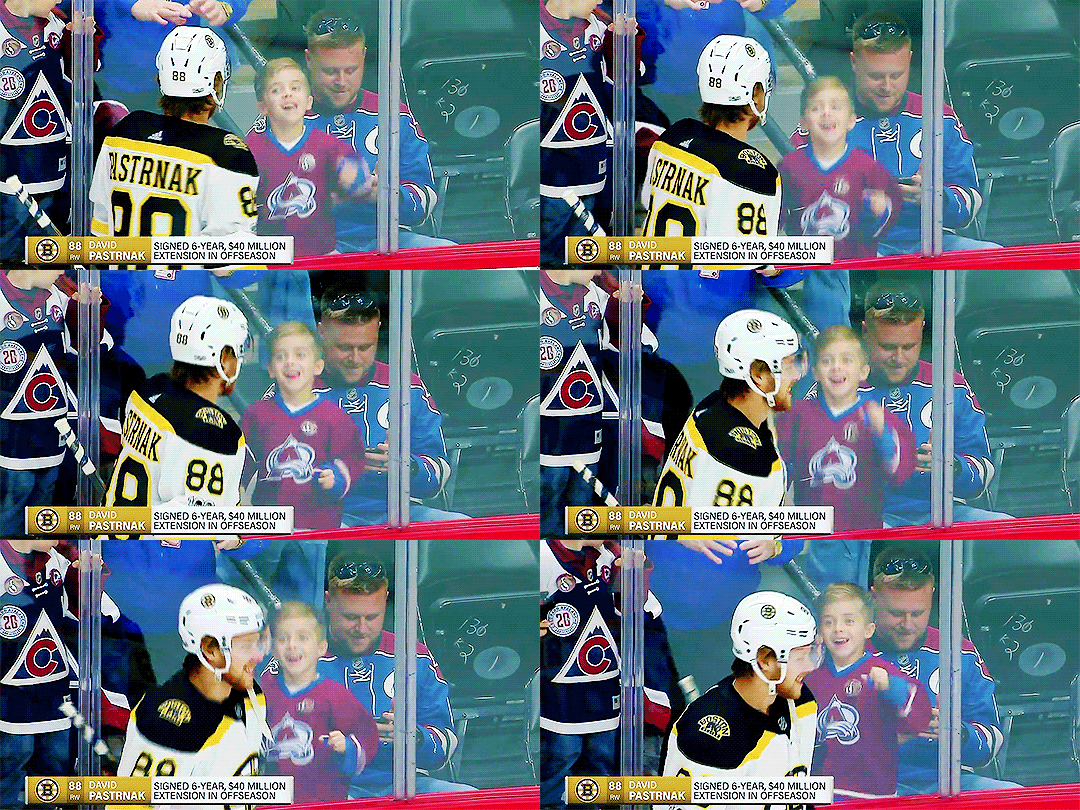
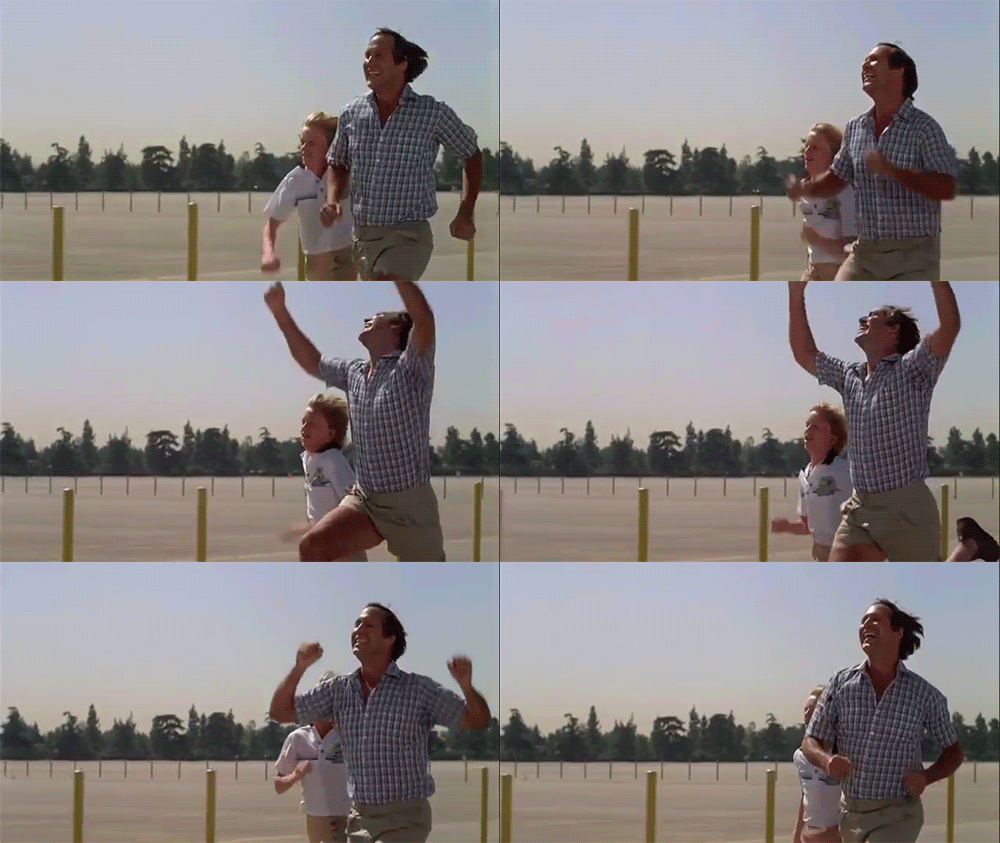
David Pastrnak is a talented, All-Star right winger for the Boston Bruins who won over the fans in Boston from day one for moments like this:
...and for moments like this:
Pastrnak has developed into a tremendous hockey player. After joining the Bruins as an 18-year-old, he had two modest seasons, then broke out for two consecutive 30-goal seasons. This year, Pasta started out like a house afire, scoring seven goals in Boston's first five games of the season. He reached the ten goal mark after nine games, and had 17 goals in the first 18 games of the season. Pretty astounding!
But Pasta cooled off. The next ten games saw him score just three goals. It took another ten games to get his next three goals. And it's taken seven to get the next three. Currently, Pastrnak has 26 goals in 45 games on the year, an impressive total that has Pastrnak tied for 7th in the League in goals, out of almost 600 players.
Three goals in a 10-game span is an impressive stretch for the vast majority of NHL players; to do so over the course of a season leads to a solid, respectable 20+ goal season. While Bruins fans know Pasta is not going to score every single game, the hope that Pasta would provide Boston with its first 50-goal player since the days of Cam Neely dim a little with each game--though we also know that Pasta is capable of going on a hot streak and scoring, say, seven goals in five games, or 17 in 18.
Slumps happen. Top-tier goal scorers go through periods where, to paraphrase the late, great Bill Chadwick, they couldn't shoot the puck in the ocean from the end of a dock. Goaltenders spring leaks. It happens. The players keep working, and if the slump gets bad enough, they do crazy things, like change how they tape their sticks, or find a new pre-game meal or stop shaving or start shaving or wash the lucky socks. Eventually, the puck starts (or stops, if you're a goalie) going in, and everyone: the player, his teammates, the fans, are happy again.
I write about this because I am, perhaps for the first time since I started seriously writing, going through a slump. Yeah, I'm sure if I dug through the archives of this blog, I could find posts where I whine and moan about being in a slump, but this one feels different. Way different. I think I wrote somewhere around Thanksgiving that I had resurrected an old project, and it was kind of, sort of going well. Now, it's not. While I was home for 2+ weeks at Christmas, I wrote almost nothing. I would sit at the computer, stare at the screen, and type around things, if you know what I mean. No scenes. No characters. No sense of what comes next from where I was in the story. And in the two weeks since I've been back at work? I've written absolutely nothing, at least on this story (I did go back last week and rewrote an opening scene from some other, long-dead project of mine, but that, too, seems to be going nowhere).
Back when I used to participate in the Absolute Write forums, I would generally respond to people who would complain of slumps or block or uncertainty to "write through it" or "just write it." Got a scene that is really sticky? Write through it. Not sure if your hero should use the gun or not? Just write it--both ways. You'll figure it out. I still think it's generally good advice. The act of writing, of pulling words, sentences, scenes out of your head and onto a page, though it feels draining, also leads to filling. It leaves room for more ideas.The problem is, when I sit at the keyboard these last few weeks, there just doesn't seem to be anything there at all to work with. It's a bit disheartening, to say the least.
David Pastrnak might try to bust a slump by changing the color of tape on his stick, or finding a new lucky sweater. Maybe I need to try an outline. Or different writing music (or none at all). Or clean up my workstation. I'm willing to take ideas. What do you do to bust out of a writing slump?
...and for moments like this:
Pastrnak has developed into a tremendous hockey player. After joining the Bruins as an 18-year-old, he had two modest seasons, then broke out for two consecutive 30-goal seasons. This year, Pasta started out like a house afire, scoring seven goals in Boston's first five games of the season. He reached the ten goal mark after nine games, and had 17 goals in the first 18 games of the season. Pretty astounding!
But Pasta cooled off. The next ten games saw him score just three goals. It took another ten games to get his next three goals. And it's taken seven to get the next three. Currently, Pastrnak has 26 goals in 45 games on the year, an impressive total that has Pastrnak tied for 7th in the League in goals, out of almost 600 players.
Three goals in a 10-game span is an impressive stretch for the vast majority of NHL players; to do so over the course of a season leads to a solid, respectable 20+ goal season. While Bruins fans know Pasta is not going to score every single game, the hope that Pasta would provide Boston with its first 50-goal player since the days of Cam Neely dim a little with each game--though we also know that Pasta is capable of going on a hot streak and scoring, say, seven goals in five games, or 17 in 18.
Slumps happen. Top-tier goal scorers go through periods where, to paraphrase the late, great Bill Chadwick, they couldn't shoot the puck in the ocean from the end of a dock. Goaltenders spring leaks. It happens. The players keep working, and if the slump gets bad enough, they do crazy things, like change how they tape their sticks, or find a new pre-game meal or stop shaving or start shaving or wash the lucky socks. Eventually, the puck starts (or stops, if you're a goalie) going in, and everyone: the player, his teammates, the fans, are happy again.
I write about this because I am, perhaps for the first time since I started seriously writing, going through a slump. Yeah, I'm sure if I dug through the archives of this blog, I could find posts where I whine and moan about being in a slump, but this one feels different. Way different. I think I wrote somewhere around Thanksgiving that I had resurrected an old project, and it was kind of, sort of going well. Now, it's not. While I was home for 2+ weeks at Christmas, I wrote almost nothing. I would sit at the computer, stare at the screen, and type around things, if you know what I mean. No scenes. No characters. No sense of what comes next from where I was in the story. And in the two weeks since I've been back at work? I've written absolutely nothing, at least on this story (I did go back last week and rewrote an opening scene from some other, long-dead project of mine, but that, too, seems to be going nowhere).
Back when I used to participate in the Absolute Write forums, I would generally respond to people who would complain of slumps or block or uncertainty to "write through it" or "just write it." Got a scene that is really sticky? Write through it. Not sure if your hero should use the gun or not? Just write it--both ways. You'll figure it out. I still think it's generally good advice. The act of writing, of pulling words, sentences, scenes out of your head and onto a page, though it feels draining, also leads to filling. It leaves room for more ideas.The problem is, when I sit at the keyboard these last few weeks, there just doesn't seem to be anything there at all to work with. It's a bit disheartening, to say the least.
David Pastrnak might try to bust a slump by changing the color of tape on his stick, or finding a new lucky sweater. Maybe I need to try an outline. Or different writing music (or none at all). Or clean up my workstation. I'm willing to take ideas. What do you do to bust out of a writing slump?
Monday, January 7, 2019
Reading List, 2018, Part Final
Hello again! A week later, happy 2019. I hope all of you had an enjoyable holiday season. I was fortunate to have two plus weeks off at the holidays, owing to the fact that I needed to burn a bunch of vacation time before the end of the year, and that my boss, in recognition of all the extra hours we put in throughout the year, closes the office for the Christmas week. The downside of all that down time is that it's very hard to go back to work and get back in that groove. It was nice that last week was a three-day week, since we get New Year's Day as a holiday.
Well, like work last week, I'm going to ease back into the blogging thing by finishing off my 2018 reading list. To see what else I read last year, visit here, here and here. Onward! (Or, actually, backward!):
Reading List, 2018, Part IV (October-December):
Olive Kitteridge (2008), Elizabeth Strout. I get why this won the Pulitzer. Great book.
Full Dark, No Stars (2010), Stephen King. Whenever I have nothing new to read, I grab some King off the shelf. Haven't read this one since it came out, and it's pretty good.
The Bartender's Tale (2012), Ivan Doig. This was one of these books I saw on a list, like "20 books everyone must read by the time they're 50" or something like that. I was underwhelmed.
Elevation (2018), Stephen King. Surprisingly optimistic homage to Richard Matheson, though it wears it's politics like a MAGA hat. Or an "I'm With Her" shirt.
The Unconsoled (1995), Kazuo Ishiguro. I nearly put this down ten pages in following a three-page monologue by an old baggage carrier. I'm glad I stuck with it. Absurdist? Surreal? Yes and yes, and ultimately rewarding.
Capital (2012), John Lanchester. Also on one of those lists, and also underwhelming.
The Flicker of Old Dreams (2018), Susan Henderson. A mortician's daughter in a dying town in Montana. Very nicely done.
The Rooster Bar (2017), John Grisham. Way back when, I read The Firm, A Time to Kill, The Client and (probably) The Pelican Brief. Like everyone else. I don't know if Grisham's books were always like The Rooster Bar or if he just swung and missed with this one. Protagonists are not especially likable, and every character sounds pretty much the same.
Looking at the year overall, I read 34 books, which feels a little short. I went through a couple of periods where I didn't read at all for a couple of weeks, for reasons I can't remember. Of the books, 31 were fiction, 3 were non-fiction. Eighteen were written by male authors, 15 by females, and one by I-don't-know-they-used-initials. If pressed, I would say my favorite book of the year was American War, by Omar El Akkad, followed closely by Olive Kitteridge, by Elizabeth Strout; my least favorite book was Catskill, by John Hayes, with The Rooster Bar a close second; and the most important book I read was Oops: Tales from a Sexpert, by Vivian Peters.
Quote of the Year:
On to 2019!
What about you? Did you have a good reading year in 2018? What were some of your favorite books?
Well, like work last week, I'm going to ease back into the blogging thing by finishing off my 2018 reading list. To see what else I read last year, visit here, here and here. Onward! (Or, actually, backward!):
Reading List, 2018, Part IV (October-December):
Olive Kitteridge (2008), Elizabeth Strout. I get why this won the Pulitzer. Great book.
Full Dark, No Stars (2010), Stephen King. Whenever I have nothing new to read, I grab some King off the shelf. Haven't read this one since it came out, and it's pretty good.
The Bartender's Tale (2012), Ivan Doig. This was one of these books I saw on a list, like "20 books everyone must read by the time they're 50" or something like that. I was underwhelmed.
Elevation (2018), Stephen King. Surprisingly optimistic homage to Richard Matheson, though it wears it's politics like a MAGA hat. Or an "I'm With Her" shirt.
The Unconsoled (1995), Kazuo Ishiguro. I nearly put this down ten pages in following a three-page monologue by an old baggage carrier. I'm glad I stuck with it. Absurdist? Surreal? Yes and yes, and ultimately rewarding.
Capital (2012), John Lanchester. Also on one of those lists, and also underwhelming.
The Flicker of Old Dreams (2018), Susan Henderson. A mortician's daughter in a dying town in Montana. Very nicely done.
The Rooster Bar (2017), John Grisham. Way back when, I read The Firm, A Time to Kill, The Client and (probably) The Pelican Brief. Like everyone else. I don't know if Grisham's books were always like The Rooster Bar or if he just swung and missed with this one. Protagonists are not especially likable, and every character sounds pretty much the same.
Looking at the year overall, I read 34 books, which feels a little short. I went through a couple of periods where I didn't read at all for a couple of weeks, for reasons I can't remember. Of the books, 31 were fiction, 3 were non-fiction. Eighteen were written by male authors, 15 by females, and one by I-don't-know-they-used-initials. If pressed, I would say my favorite book of the year was American War, by Omar El Akkad, followed closely by Olive Kitteridge, by Elizabeth Strout; my least favorite book was Catskill, by John Hayes, with The Rooster Bar a close second; and the most important book I read was Oops: Tales from a Sexpert, by Vivian Peters.
Quote of the Year:
"Nativism being a pyramid scheme, I found myself contemptuous of the refugees' presence in a city already overburdened. At the foot of the docks, we yelled at them to go home, even though we knew home to be a pestilence field. We carried signs calling them terrorists and criminals and we vandalized the homes that would take them in. It made me feel good to do it, it made me feel rooted; their unbelonging was proof of my belonging." From American War, Omar El Akkad.
On to 2019!
What about you? Did you have a good reading year in 2018? What were some of your favorite books?
Monday, December 17, 2018
Time off
On Friday, we went and picked up the Catbird at college for her college recess. It's nice to have her home. My wife figured it out, we're down to four more round trips to do this, maybe as little as two or three if we can get her to take the bus (taking the bus cuts more than half the time from our trip, turning ten hours of traveling in a day into maybe three). Four years goes fast. At any rate, I thought I'd take this opportunity to take a couple of weeks...off! My next post will either be on December 31 or January 7, depending on how I feel. Or, I could post next week. You never know. Whatever I choose to do, I hope all of you have a lovely couple of weeks and enjoy the holidays!
Monday, December 10, 2018
"I think there's a play there!"
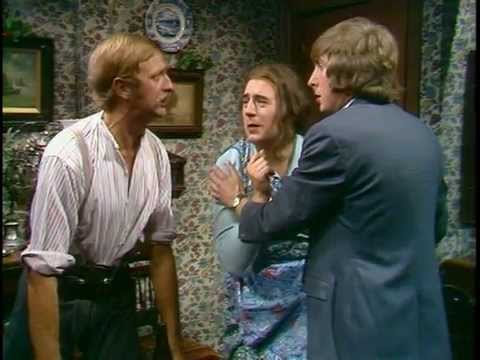
Monty Python's Flying Circus once featured a skit in which a well-dressed, professional looking young man named Ken (Eric Idle) returns to the home of his parents, where he receives a warm welcome from his mother (Terry Jones), but hostility from his father (Graham Chapman). What starts out looking like a tale of a college boy coming home to his working-class parents is quickly turned on its head, as Ken is a coal miner, while his father is an award-winning playwright and novelist. "There's nowt wrong with gala luncheons, lad!" sneers the father. "I've had more gala luncheons than you've had hot dinners!" The father suffers an attack of writer's cramp and kicks his disgrace of a son out, and then--the punch line: "I think there's a play there!"
It's the blessing and the curse of writers to see 'the play there' in all kinds of situations. A few years back, while driving through a hurricane to pick the Magpie up at a friend's house, I watched a normally placid creek boil through a culvert, and I asked myself, "What if I couldn't get to the house to pick the Magpie up?" This question was followed by opposite, but equally compelling thoughts: "That would be horrible!" and "Ooh, that might make a good story!"
Since I was actually able to pick up the Magpie and get her home safely, it was a case of 'no harm, no foul' and I was able to let my imagination run wild over the scenario I had imagined. And it was a good story. But sometimes, it's not always 'no harm, no foul.' One of the first ideas I ever had, though one I did not see to completion, as I wasn't seriously writing then, came about after hearing about two different, but related stories: one was a radio interview with the director of the Southern Poverty Law Center about the rise of hate groups, and the other was a particularly chilling story of a midwestern militia group that was planning on killing a state trooper, then ambushing the funeral. Pretty horrible stuff, but potentially the basis of a good story (and one that keeps coming back to me).
At the end of last week, I learned that a local man, someone I know through the school system, someone who was the Catbird's track coach for two years in middle school, someone about whom I would say, "He's a good guy!" was accused of a pretty nasty crime. You don't want to believe it when it's someone you know, when it's someone you think of as "a good guy." Hoping that it was some kind of mistake or misunderstanding, I found the criminal complaint attached to an online story. Innocent until proven guilty, yes, but this seemed pretty damning, and disgusting. And yet.
And yet, even in all of that, I find that Monty Python punch line coming back to me. "I think there's a play there!" There is, of course. There's a story there, in this man's crime; in its impact on his family, on the community. There's also the story of the victims, and the detective who discovered it. I don't know if I'd ever use this local man's crime as the basis of a story or not. It might never feel right, either due to the nature of the crime or because it's too close to home, but the story's there, just as there's a story in pretty much everything we see around us: the mother and child at the bus stop. The old woman who meticulously rakes her lawn every morning. The fender bender at the gas station. There's a story there. In fact, there are myriad stories in every instance, it's just a matter of which part of it we choose to tell.
It's the blessing and the curse of writers to see 'the play there' in all kinds of situations. A few years back, while driving through a hurricane to pick the Magpie up at a friend's house, I watched a normally placid creek boil through a culvert, and I asked myself, "What if I couldn't get to the house to pick the Magpie up?" This question was followed by opposite, but equally compelling thoughts: "That would be horrible!" and "Ooh, that might make a good story!"
Since I was actually able to pick up the Magpie and get her home safely, it was a case of 'no harm, no foul' and I was able to let my imagination run wild over the scenario I had imagined. And it was a good story. But sometimes, it's not always 'no harm, no foul.' One of the first ideas I ever had, though one I did not see to completion, as I wasn't seriously writing then, came about after hearing about two different, but related stories: one was a radio interview with the director of the Southern Poverty Law Center about the rise of hate groups, and the other was a particularly chilling story of a midwestern militia group that was planning on killing a state trooper, then ambushing the funeral. Pretty horrible stuff, but potentially the basis of a good story (and one that keeps coming back to me).
At the end of last week, I learned that a local man, someone I know through the school system, someone who was the Catbird's track coach for two years in middle school, someone about whom I would say, "He's a good guy!" was accused of a pretty nasty crime. You don't want to believe it when it's someone you know, when it's someone you think of as "a good guy." Hoping that it was some kind of mistake or misunderstanding, I found the criminal complaint attached to an online story. Innocent until proven guilty, yes, but this seemed pretty damning, and disgusting. And yet.
And yet, even in all of that, I find that Monty Python punch line coming back to me. "I think there's a play there!" There is, of course. There's a story there, in this man's crime; in its impact on his family, on the community. There's also the story of the victims, and the detective who discovered it. I don't know if I'd ever use this local man's crime as the basis of a story or not. It might never feel right, either due to the nature of the crime or because it's too close to home, but the story's there, just as there's a story in pretty much everything we see around us: the mother and child at the bus stop. The old woman who meticulously rakes her lawn every morning. The fender bender at the gas station. There's a story there. In fact, there are myriad stories in every instance, it's just a matter of which part of it we choose to tell.
Monday, December 3, 2018
Elevation: A quasi review
Well, a little late today, but better late than never, right? Let's hope so, anyway.
I actually had some partially-written posts going, but when my alarm went off this morning I turned it off--then woke up forty minutes later and ended up short of time. I've had my alarm clock for probably twenty-five years (seriously!), maybe more, and I still never hit the snooze button. I always swear I'll get up in a few minutes, and usually, I do. I must have been a little tired. Anyway, on to today's post. Be warned, there may be mild spoilers for Stephen King's Elevation ahead. Not like I give away the ending or anything.
I don't know what surprised me more: Finding out in early October that Stephen King had yet another book coming out in 2018, or finding out how very small it is. Seriously, when my librarian handed it over to me last week (first one to read it, too!), I almost asked, "Is that all there is?" King's last two books, Sleeping Beauties, co-written with his son, Owen, and The Outsider clocked in at 702 and 576 pages, respectively. Elevation is, by contrast, a slip of a book, a novella, really, of just 146 pages, a book that can fit in one hand and is barely thicker than that hand (pretty cover, though).
Elevation is the story of a middle-aged man who finds himself inexplicably losing weight--with a catch. When the story opens, he's already dropped 28 pounds, but he looks exactly as he did when he was weighed 240. As his weight continues to drop, at about two pounds a day, there is no change to his outward appearance. The book hearkens back to King's 1984 novel, Thinner (written under his Richard Bachman pseudonym, in which an obese lawyer loses weight uncontrollably after being cursed) and Richard Matheson's The Shrinking Man, in which a man shrinks by 1/7" a day. In fact, Elevation's protagonist shares the same name, Scott Carey, with the hero of Matheson's book, and the dedication for Elevation reads "Thinking of Richard Matheson." King wears his influences on his sleeve. (NOTE: I now find myself wanting to re-read both Thinner and The Shrinking Man)
It took me about a day to read, and the surprises kept coming, though. For the first time in a long time, I found myself wishing that the book was longer. That's not something I've said about a King book in a while. Now, for the record, I like long books--when they're good. King has put out some really long books (1138 pages for It; 1074 pages for Under the Dome), and I mostly really enjoy them. But both Sleeping Beauties and The Outsider felt way too long for me, full of extraneous characters and too much...well, something. Elevation has none of the bloat, but I found myself wanting more backstory for our main characters, more of the sketches of small-town Maine and the quirky folks who live there. Not this time.*
But the thing that surprised me the most? Unlike Thinner, or even The Shrinking Man, Elevation is suprisingly optimistic. King is well-known for torturing his characters, for putting them through the wringer, for always asking himself, "How can I make things worse for them?" Here, however, the worst thing happens in the first ten pages. King's version of Scott Carey quickly accepts what he thinks his fate will be, and unlike Thinner's Billy Halleck and The Shrinking Man's Scott Carey, King's Carey actually seems to gain from losing: he gains perspective on his own life, and on that of his beloved town of Castle Rock.
Over at Stacy's blog last week, Stacy asked me what genre I thought Elevation fit into. It's clearly not horror. Nor does it fit quite into fantasy. The phrase that came to my mind was "magical realism," even though there's no magic in the traditional sense. Thinking about it some more, it almost has the feel of a fable to me, so that's what I'll go with.
I'm kind of lacking a concluding paragraph here, so I'll turn it over to you: Have you read Elevation? What did you think of it? Have you ever been surprised by something an author did in a book the way I was surprised by Elevation? Please share, and thanks for reading!
*In hindsight, given the style of book, its length is probably a good thing. If King started coloring in the back pages in his typical King way, it might have shifted the narrative in a direction he didn't want to go, maybe even turned this into more of a horror or science fiction novel. Keep true to your vision, Stephen!
I actually had some partially-written posts going, but when my alarm went off this morning I turned it off--then woke up forty minutes later and ended up short of time. I've had my alarm clock for probably twenty-five years (seriously!), maybe more, and I still never hit the snooze button. I always swear I'll get up in a few minutes, and usually, I do. I must have been a little tired. Anyway, on to today's post. Be warned, there may be mild spoilers for Stephen King's Elevation ahead. Not like I give away the ending or anything.
I don't know what surprised me more: Finding out in early October that Stephen King had yet another book coming out in 2018, or finding out how very small it is. Seriously, when my librarian handed it over to me last week (first one to read it, too!), I almost asked, "Is that all there is?" King's last two books, Sleeping Beauties, co-written with his son, Owen, and The Outsider clocked in at 702 and 576 pages, respectively. Elevation is, by contrast, a slip of a book, a novella, really, of just 146 pages, a book that can fit in one hand and is barely thicker than that hand (pretty cover, though).
![]() |
| It's like a little notebook! |
Elevation is the story of a middle-aged man who finds himself inexplicably losing weight--with a catch. When the story opens, he's already dropped 28 pounds, but he looks exactly as he did when he was weighed 240. As his weight continues to drop, at about two pounds a day, there is no change to his outward appearance. The book hearkens back to King's 1984 novel, Thinner (written under his Richard Bachman pseudonym, in which an obese lawyer loses weight uncontrollably after being cursed) and Richard Matheson's The Shrinking Man, in which a man shrinks by 1/7" a day. In fact, Elevation's protagonist shares the same name, Scott Carey, with the hero of Matheson's book, and the dedication for Elevation reads "Thinking of Richard Matheson." King wears his influences on his sleeve. (NOTE: I now find myself wanting to re-read both Thinner and The Shrinking Man)
It took me about a day to read, and the surprises kept coming, though. For the first time in a long time, I found myself wishing that the book was longer. That's not something I've said about a King book in a while. Now, for the record, I like long books--when they're good. King has put out some really long books (1138 pages for It; 1074 pages for Under the Dome), and I mostly really enjoy them. But both Sleeping Beauties and The Outsider felt way too long for me, full of extraneous characters and too much...well, something. Elevation has none of the bloat, but I found myself wanting more backstory for our main characters, more of the sketches of small-town Maine and the quirky folks who live there. Not this time.*
But the thing that surprised me the most? Unlike Thinner, or even The Shrinking Man, Elevation is suprisingly optimistic. King is well-known for torturing his characters, for putting them through the wringer, for always asking himself, "How can I make things worse for them?" Here, however, the worst thing happens in the first ten pages. King's version of Scott Carey quickly accepts what he thinks his fate will be, and unlike Thinner's Billy Halleck and The Shrinking Man's Scott Carey, King's Carey actually seems to gain from losing: he gains perspective on his own life, and on that of his beloved town of Castle Rock.
Over at Stacy's blog last week, Stacy asked me what genre I thought Elevation fit into. It's clearly not horror. Nor does it fit quite into fantasy. The phrase that came to my mind was "magical realism," even though there's no magic in the traditional sense. Thinking about it some more, it almost has the feel of a fable to me, so that's what I'll go with.
I'm kind of lacking a concluding paragraph here, so I'll turn it over to you: Have you read Elevation? What did you think of it? Have you ever been surprised by something an author did in a book the way I was surprised by Elevation? Please share, and thanks for reading!
*In hindsight, given the style of book, its length is probably a good thing. If King started coloring in the back pages in his typical King way, it might have shifted the narrative in a direction he didn't want to go, maybe even turned this into more of a horror or science fiction novel. Keep true to your vision, Stephen!
Subscribe to:
Posts (Atom)